

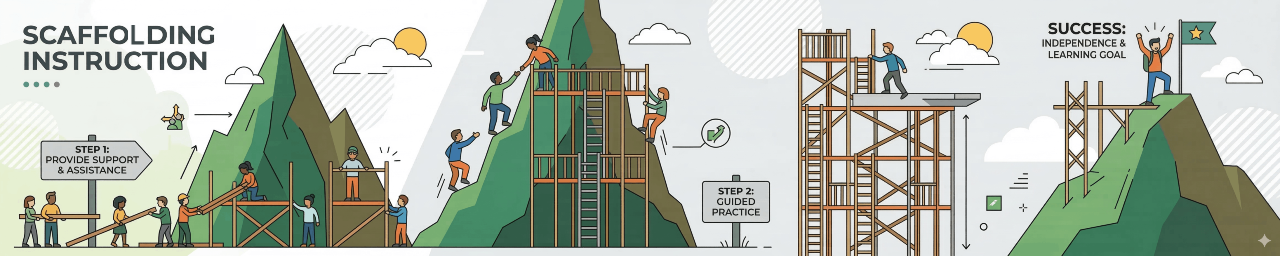
Scaffolding Frameworks
Scaffolding is the foundation of instruction and learning. Programs, courses, units, and lessons all have some scaffold to keep learners and teachers moving forward to achieve intended and needed outcomes. Being so fundamental, scaffolding should be purposeful, dynamic, transparent, and impactful.
Some of the best learning experiences I have participated in or observed have been built on strong scaffolding - often called frameworks. One particular model, adaptive, stands above so many as the model points to a purpose, it provides clear directions, it responds to student progress and choices, and it has repeatedly improved completion and performance.
Adaptive learning finds out where the student is in terms of knowledge or skill and then adjusts the paths going forward to best complete the outcomes. Many courses provide diagnostic pre-tests to determine what skills the student has and does not have. Then, using conditions and releases, a learning management sytem will change the learning plan to provide remediation or advancement. Lesson check-ins, lesson set quizzes, and unit tests all provide needed data to support or further these changes. Equally, teachers can see student progress for individuals and cohorts and address common gaps with direct lessons.
My best example would be an evening GED fulltime class. Students came in with the big blue textbook with 100 lessons. After the pre-test, they came away with the 50 - 60 lessons matched to what was moderately challenging to them and suited to their interests. The confidence and release from stress was evident. They felt seen.


